
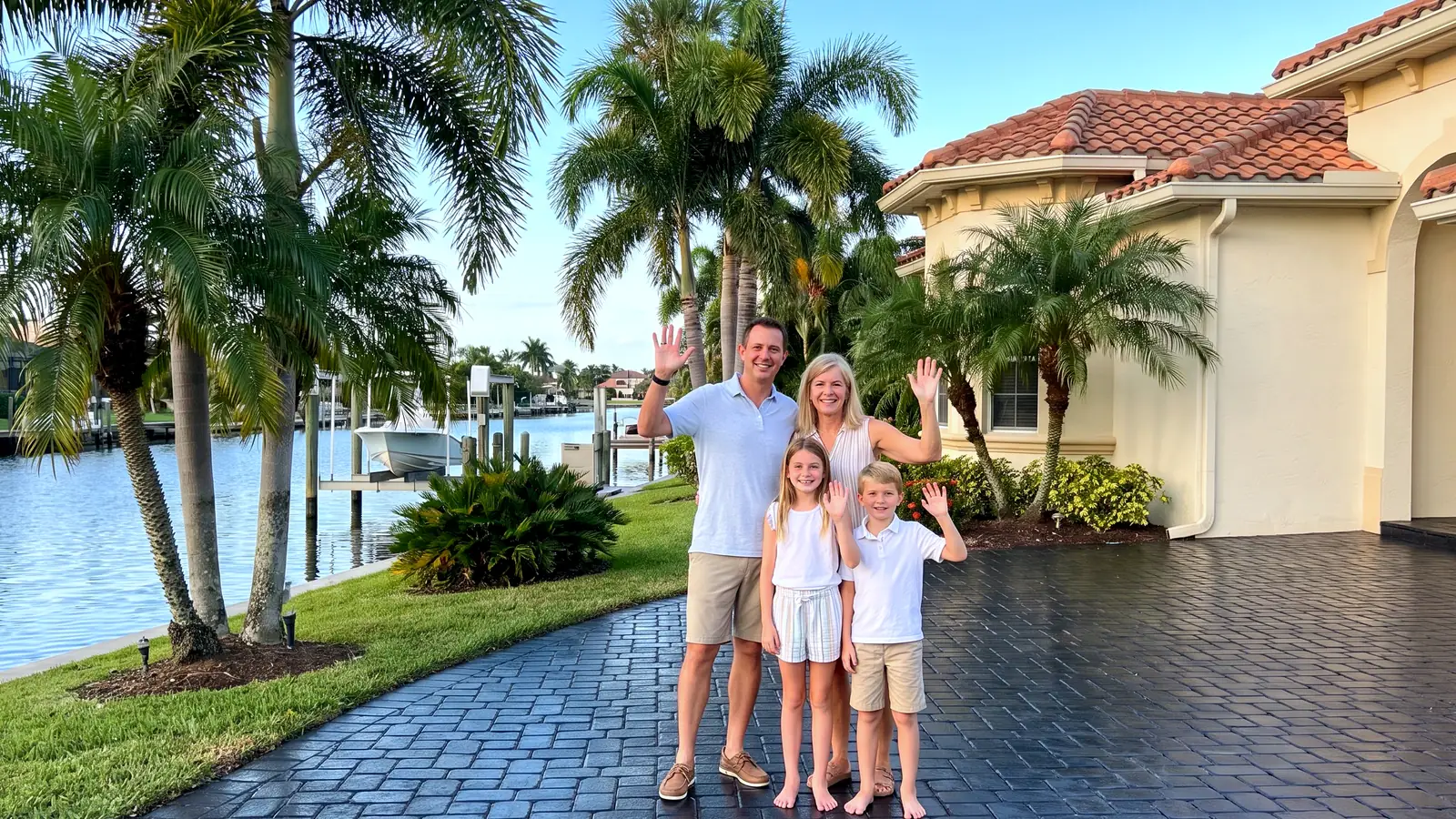
Paver sealing for Pinellas Park homes
Paver Sealing in Pinellas Park, FL
Between the ditch network and the summer storms, Pinellas Park pavers earn a free sealing estimate: call (727) 493-9640.
- Brings out deeper paver color
- Fresh joint sand helps lock pavers in place
- Gives weeds less room to grow
- Makes the surface easier to keep clean
- Free estimate, no obligation
Request a Free Estimate
Free, no obligation.
Fast, careful paver sealing in Pinellas Park
Need paver sealing in Pinellas Park? A local contractor gives a free estimate and replies within 1 business day, usually much sooner. Cleaning, fresh joint sand and a new coat are all part of it, for driveways, patios, pool decks and walks. To get started, call (727) 493-9640.
Step onto the driveway and check the joints between the pavers. If the sand is low, weeds are rooting in the gaps, and the color has gone flat, the pavers are asking for help. A wash, sand and sealer can bring one even tone back. Send a few details when you ask for a free estimate, and a quote comes with no strings.
The typical home in Pinellas Park dates to 1978, per Census estimates, so many pavers here have worked through decades of storms. A few were resealed over the years, and others were never sealed. Not sure where yours stand? Call (727) 493-9640 and the contractor will check the surface with you.
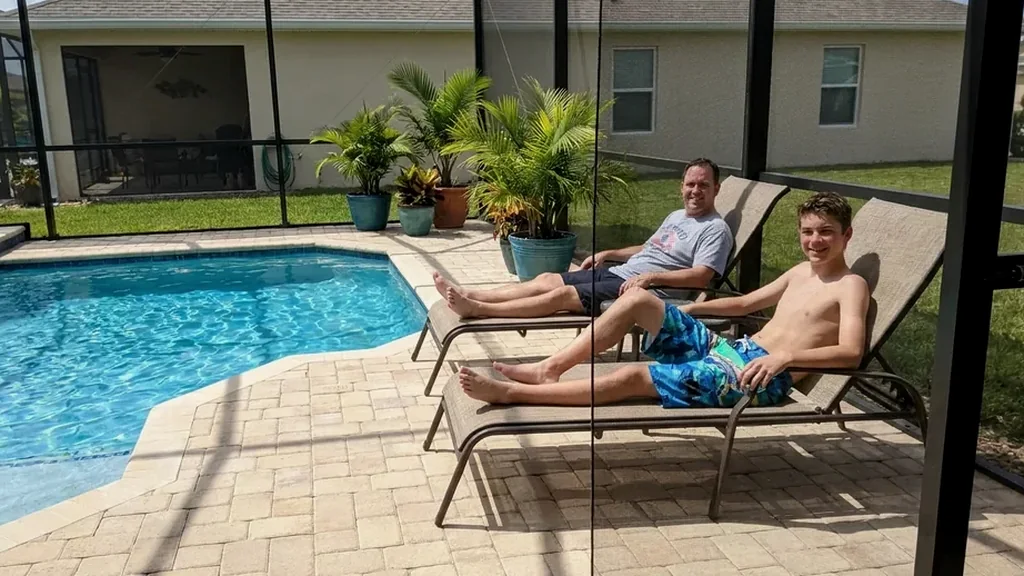
Why hire a local paver sealing contractor in Pinellas Park?
Ditches, flat lots and summer downpours change how pavers dry and drain, so Pinellas Park homeowners hire a local paver contractor. To hear how that plays out on your block, ask for a free estimate.
Free look, written price
The contractor reviews your Pinellas Park pavers at no charge and writes the price down. You decide what happens next.
A range to hold a bid to
The full clean, sand and seal runs $1.25 to $2.50 per square foot at Tampa Bay firms. Test each Pinellas Park bid against it.
Finish by surface
Matte hides tire marks on a drive. Wet look gives a pool deck more color but shows scuffs sooner.
Your say on the date
Pick the day, and ask to move it if rain shows up. An estimate carries no obligation at all.
Get Your Free Estimate in Pinellas Park
Tell us about your pavers in Pinellas Park.
Free, no obligation
What paver problems show up most in Pinellas Park?
Flat ground that sheds rain slowly
Pinellas Park sits low and flat between major bodies of water, and it has a history of flooding. The Water Management District built canals and ditches that have greatly cut that risk, and the city has spent over $100 million on drainage. Even so, rain on a flat driveway moves out slowly. Pavers that stay wet longer pick up green film and lose sand sooner, so check the low corners first. A quick look after the next rain shows where water sits the longest. The district's ditches move rain off the lot, but they depend on a steady slope. A driveway that tilts toward the house instead of the street will hold water at the garage door. England Brothers Park runs along 81st Avenue North on 11 acres of flat city land, which gives a picture of how level the ground is here. Level lots shed water slowly. Sugar cane was the planned crop, and the founders called the land 'muck.' That tells you the ground was soft, which may be why some driveways settle. A good test is a hose: run water down the drive for a minute and watch where it slows, since those slow spots are where film and lost sand will show first.
Pavers from the late 1970s
Census estimates put the typical Pinellas Park home at 1978. A driveway that old has been through decades of sun and storms, and it may have changed hands more than once. A past owner could have used any sealer, and water-based sealer cannot go over solvent-based sealer. The contractor finds out what is on the surface before picking a product. Faded color and a surface that soaks up water are the usual clues that the old coat is gone. Pinellas Park's population more than tripled after World War II, so its streets were built out across several decades. Pavers on one block can differ in age from pavers two streets over by twenty years or more. The Tampa Bay Automobile Museum opened on Gateway Centre Boulevard in 2005, which shows the city has newer commercial blocks as well as older homes. Pavers on either kind of block face the same rain. If the house changed hands in the last decade, ask the previous owner or the closing papers whether the pavers were sealed and with what.
Joint sand that leaves in summer storms
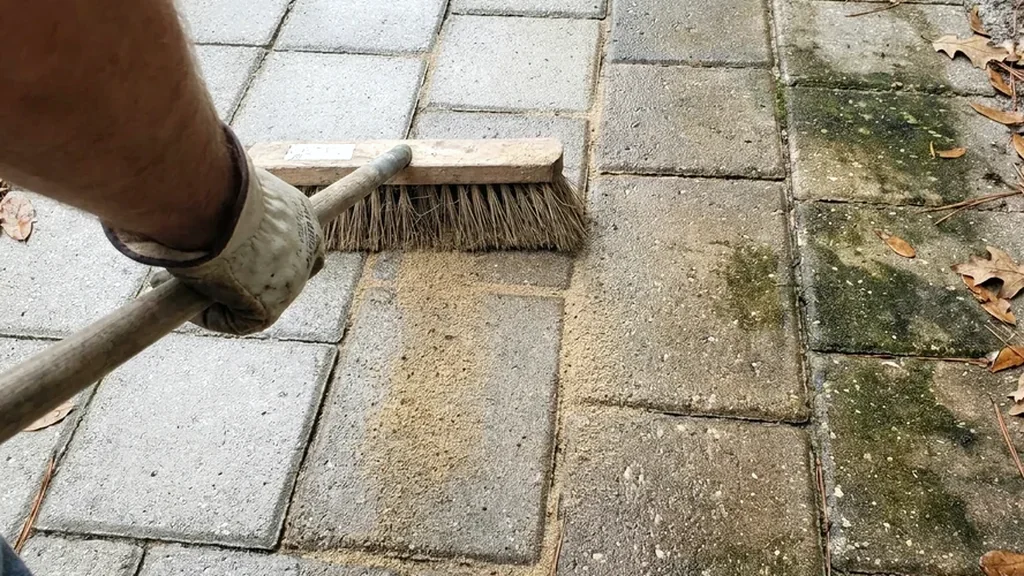
Summer is the wet stretch, May 25 to October 10, and June through September brings nearly two thirds of the year's rain. Hard downpours wash sand out of the gaps between pavers, and the loss builds up over a few seasons. Sand that has washed out of the joints is one of the signals a Pinellas County coating firm gives for resealing. Open joints invite weeds, so fresh sand is part of every job. Pavers beside thin joints rock when a car turns in, and the contractor marks them. A joint that has lost its top half-inch of sand is more than cosmetic, because the pavers beside it start to rock under tires.
Rust fans from sprinkler spray
University of Florida extension says most Florida well water is high in iron, and irrigation with it can leave orange stains. In Pinellas Park, lots that back onto ditches often have lawns running right up to the edge of the paving, since the right-of-way is part of the yard. Spray that lands on the pavers each morning leaves marks. Those are treated during the wash, since sealer would lock them in. Aiming the heads off the paving is an easy fix that keeps the marks from coming back. Where a ditch runs behind the property, the right-of-way is the owner's to keep, and a lawn in that strip needs water. Irrigation next to a drive can leave rust or hard-water spots. Ditch banks that are mowed twice a year in the growing season stay trim, but the yard side is the homeowner's to keep. Overgrown edges shade the paving. Hard-water spots look white or tan, while iron leaves orange, and the two call for different treatment before the coat goes on.
Green film in damp corners
Trade guidance says moss and algae should stay off pavers unless the spot is heavily shaded. Where a fence, a screen cage or a tree blocks the sun, the surface can stay damp for days after a storm. The green starts at the edge and spreads. Cleaning it off before sealing is a must, because a coat over it traps the film. Dim walks beside a fence are the usual first spots to look. A fence line on a flat lot blocks the breeze and the sun together, so the damp stays longer. Watch the shaded edge of the patio for the first green tint after a rainy week. Climate here is humid subtropical, hot and wet in summer and mild in winter. That means the pavers face the same sun and storm cycle each year. A fence, a hedge and a shade tree on the same lot can add up to a corner that never sees a full hour of sun.
Does it matter if my Pinellas Park home sits near a drainage ditch?
It can, because the ditches shape how water leaves your lot. The Pinellas Park Water Management District's boundaries follow drainage basins, and it maintains the major canals. A driveway beside a ditch often slopes toward it. Tell the contractor which side of the street you are on when you ask for a free estimate.
Homeowners keep up the right-of-way between the ditch and their property line, according to the district. That strip is often lawn, and lawns mean sprinklers. Overspray from those heads can stain the pavers at the edge. If you see orange marks near the street end of the drive, call (727) 493-9640.
Pinellas Park touches St. Petersburg, Clearwater, Largo, Seminole and Kenneth City, so a street near the city line can feel like it belongs to a neighbor. The county lists Roosevelt Creek, two Pinellas Park ditch basins and the Starkey Road basin among its watersheds. Ask which one your street drains to. Share your cross streets when you ask for a free estimate.
What does paver sealing cost in Pinellas Park?
Around Tampa Bay, firms list $1.25 to $2.50 per square foot for washing, re-sanding and sealing. Each job has the same built-in steps: travel, gear, prep, washing, drying, joint sand, sealing and cleanup. That is why short walks often price higher per foot than long drives. For a figure that fits your Pinellas Park lot, call (727) 493-9640.
Condition moves the price too. Green film, rust marks and low joint sand all add time before sealer goes on. An older driveway with a spent coat usually needs more prep than one sealed a few years back. One estimate that covers every paver area helps with that, so ask for a free estimate and list them all.
| Paved area | Typical example | Clean, sand and seal |
|---|---|---|
| 300 sq ft | Small patio or walkway | $375 to $750 |
| 600 sq ft | Two car driveway | $750 to $1,500 |
| 1,000 sq ft | Large driveway or pool deck | $1,250 to $2,500 |
| 1,500 sq ft | Driveway plus pool deck | $1,875 to $3,750 |
Math based on the $1.25 to $2.50 per square foot that Tampa Bay paver companies publish. Your contractor sets the actual price after seeing the surface. Repairs, leveling and stripping failed sealer are usually extra.
How does a paver sealing job work in Pinellas Park?
Read how the water moves
The contractor watches where rain runs off your Pinellas Park drive and where it sits. A splash test shows whether an old coat still beads. Pavers that have sunk or lifted are marked for resetting, since a dip holds water. The surface is measured, and the total goes on your quote. The contractor also asks about past standing water at the garage door, since that shows where to look for lifted edges. The contractor checks the apron where the drive meets the street, since low spots there collect the first runoff. The wash begins at the highest point and works down, so dirty water leaves the surface in one direction. A quick sketch of the lot, with the slope and the problem spots marked, goes with your quote.
Wash off the film, the rust and the tire marks
Washing takes off dirt, tire marks and green film from damp corners. Orange fans from sprinklers get their own treatment. Runoff goes toward the street or the lawn, and plants are covered. Stains that remain are pointed out. Sprinkler heads and low-voltage lights near the paving are noted, and the wash is aimed away from them. Fresh sand is added after the wash and checked again once the pavers have dried. The crew checks the garage threshold, where sand and water collect and where a puddle may linger. Gutter splash lines and tire tracks are scrubbed twice if the first pass leaves a shadow.
Pack the joints with sand
Sand is swept in until each gap is full, then swept again after it settles. On flat ground where rain lingers, loose joints let water slip under the pavers. Loose sand is cleared from the top afterward. After a heavy rain, a quick look at the joints is a good check on how well the sand held. A look at downspouts and gutters shows whether roof water is landing on the paving. Sand is swept dry, never wet, so it flows into the gaps. A narrow brush reaches the joints beside curbs and steps, where sand is thinnest.
Wait out the puddles
Sealer needs dry pavers and dry joints. After a storm, low corners drain last, so the contractor checks them by hand. If anything is cool or damp, the job waits for another day. Flat lots shed water slowly, so a driveway that looks dry on top may still hold water under the edge pavers. If the surface is slightly cool or damp to the touch, the crew waits rather than rush. A shaded corner may take an extra hour to dry, and the crew works the sunny side first. After a muggy night the surface can stay cool, so testing waits until the sun has done some work.
Seal it and mark the no-go window
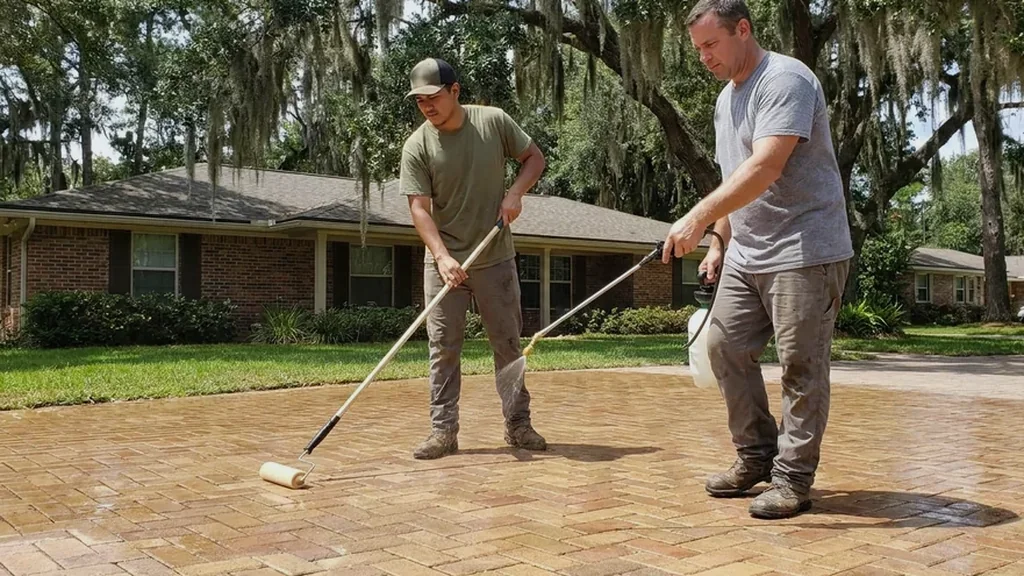
The coat is sprayed and rolled. A Brandon firm and a Pinellas County firm give similar numbers: about a day for feet, and one to two days for cars. Ask for the window that matches your product. A written record of the product and date helps whoever handles the next coat. Edges that meet lawn or ditch banks get a careful coat, since they take the most abuse from mowers and spray. The crew leaves the surface clean of loose sand and dust before packing up. A small area, such as a step, is done last so nothing is tracked across fresh sealer.
Complete paver services in Pinellas Park
The job runs as a relay: wash, sand, dry, seal. Each leg hands off to the next, and flat lots slow the handoff at the dry stage. Sealer only goes down on a clean, dry surface. To hear how long each leg might run, call (727) 493-9640.
Surfaces differ in what they take. A driveway takes tires and full sun, a pool deck takes splash and leaves, and a walk beside a fence stays wet. The plan changes with each one. List yours when you ask for a free estimate.
Sealer type and finish are separate choices. A water-based product will not go over a solvent-based coat, so the old coat decides the type. Matte hides tire marks on a drive, and wet look is better kept for a pool deck. Call (727) 493-9640 to talk it through.
Rain sets the calendar in Pinellas Park. The wet season runs May 25 to October 10, and most of it falls in summer. Dry weeks make scheduling easy, though a clear July morning can work. To ask about the next open day, ask for a free estimate.
Questions to ask before you hire
- What time do you usually start in the morning, and how long are you on my property?
- How do you clear the moss and green film that grow near my downspouts and in the cracks?
- Is the price different for one coat on the driveway and two coats on the pool deck?
- How do you tell whether my pavers need a fresh coat or only a good wash?
- How do you remove the white haze that sometimes shows up on pavers?
- Do you lift and relevel pavers that dip near the garage apron before you start?
- Will you work around my sprinkler heads and low voltage lights, or cap them off?
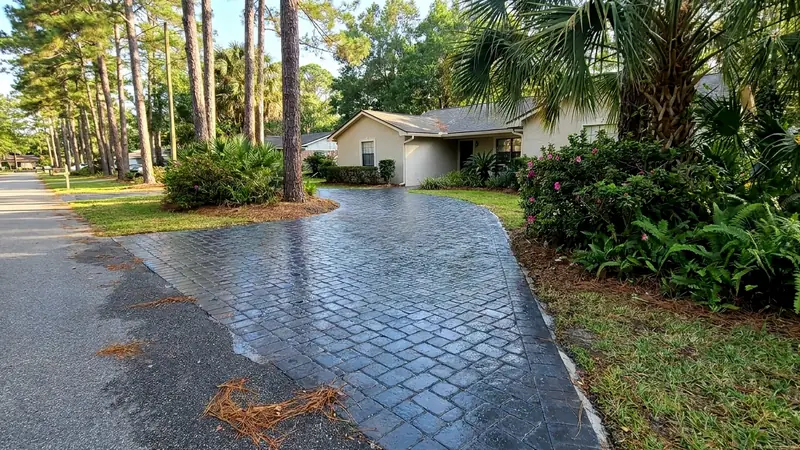
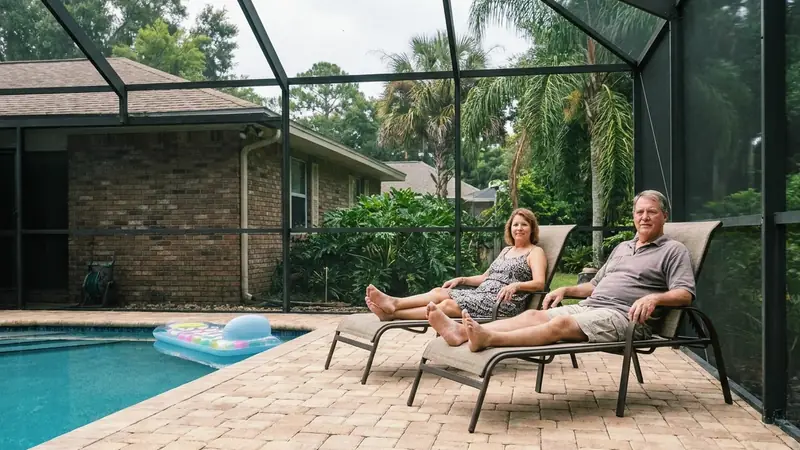
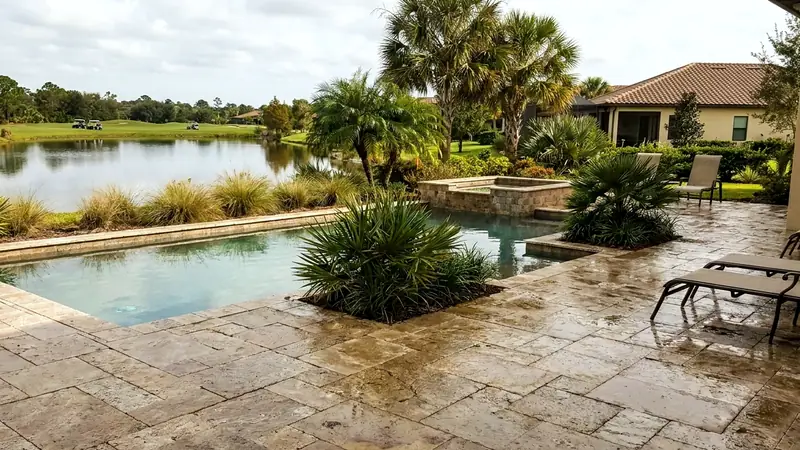
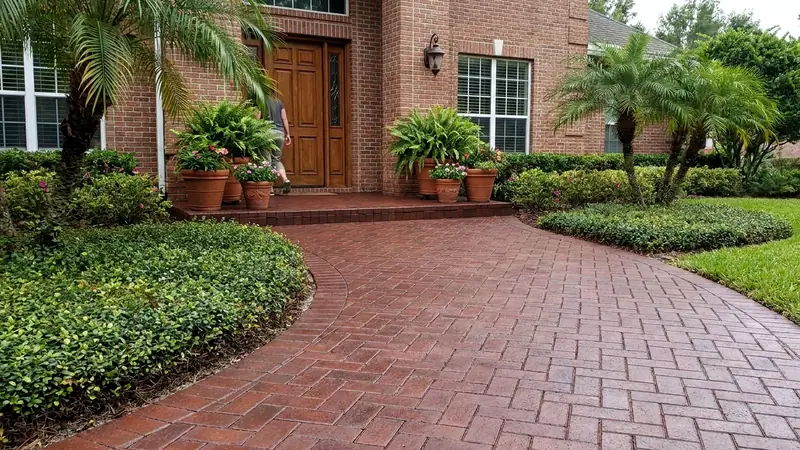
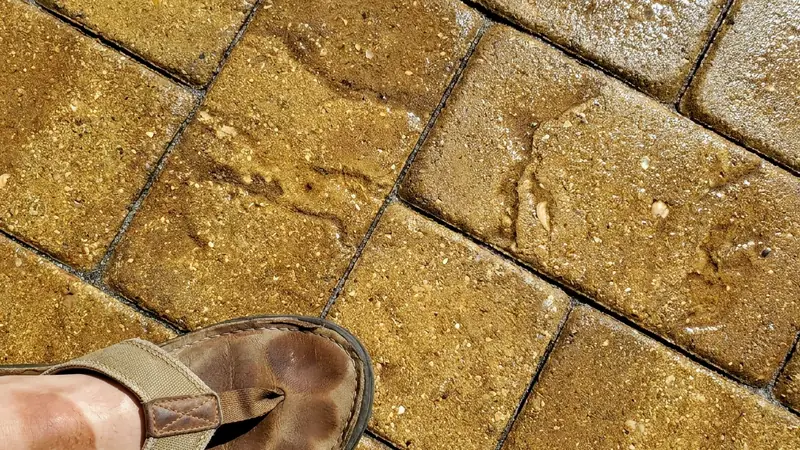
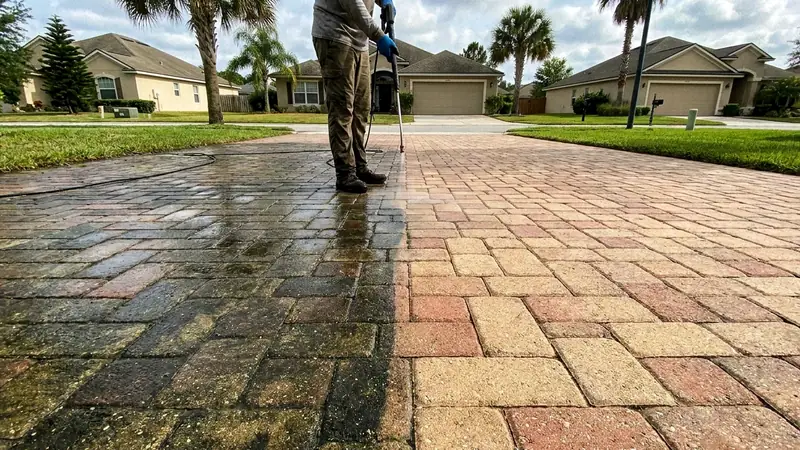
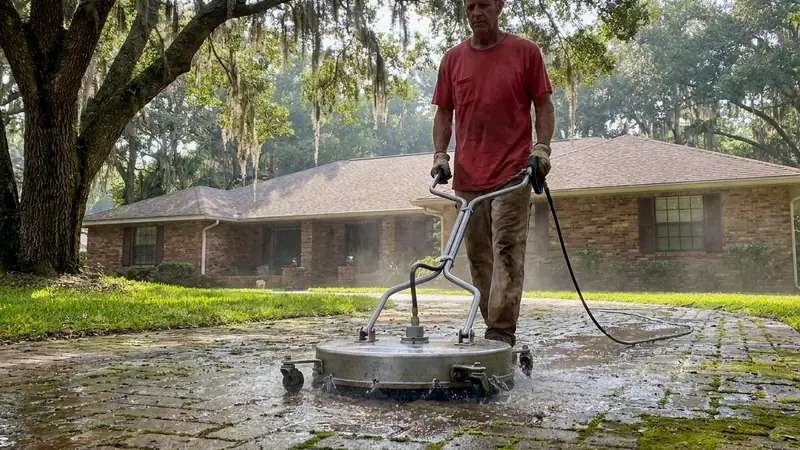
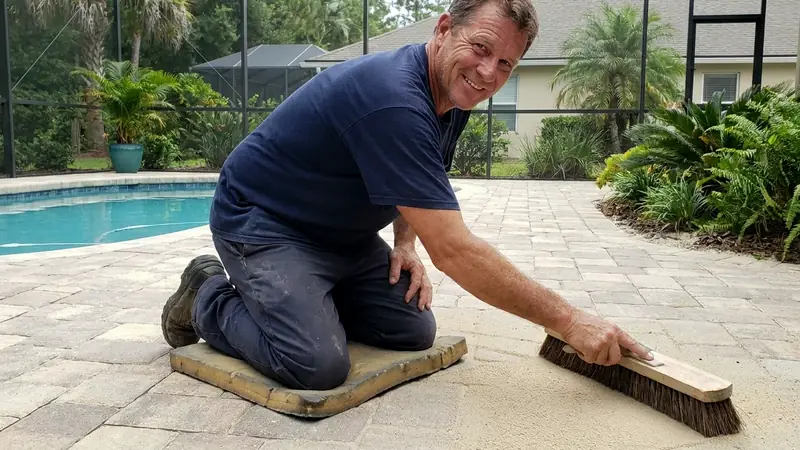
What do sealed pavers look like around Pinellas Park?
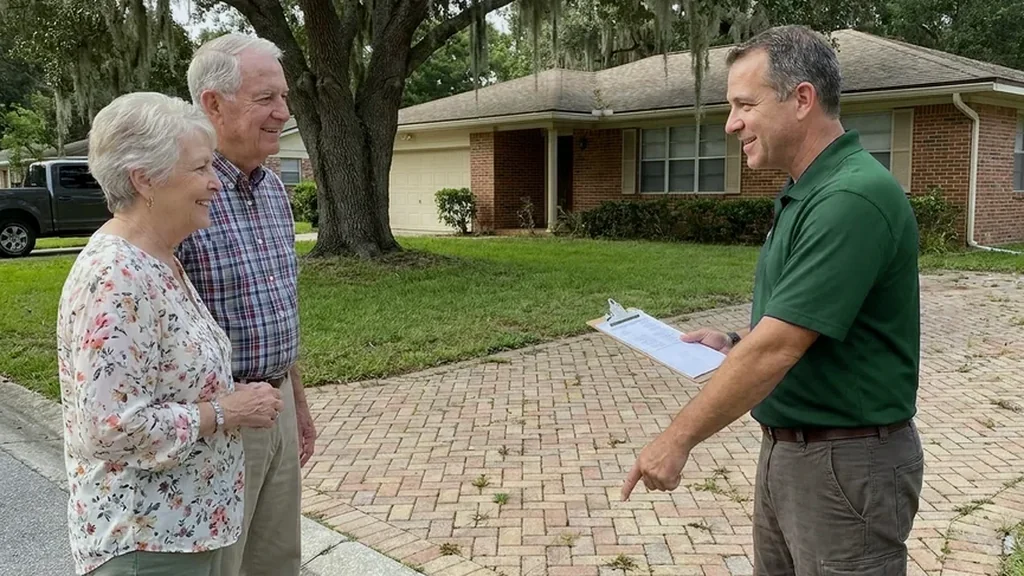
Why local matters in Pinellas Park
A contractor in Pinellas Park knows how the ditch network and flat lots affect drying. They ask which way your drive slopes and where water stands. That tells them how long to wait. To talk with a crew that asks, call (727) 493-9640.
Home age is the other local detail. The median house here dates to 1978, so older coats and unknown products are common. A local crew learns to spot them. Share what you know when you ask for a free estimate.
Pinellas Park sits in the middle of the county, so crews can reach it from either coast side without a long haul. That makes a rain-day swap easy to arrange. A short gap between wash and coat also keeps dirt from settling in. Call (727) 493-9640 to ask about openings.
How did Pinellas Park begin, and does that matter for my pavers?
It began as a farm colony, which is why the ground and the ditches look the way they do. Publisher Frank Allston Davis bought 12,800 acres around 1911, and the Florida Association built a two-story Colony House for buyers. The founders planned sugar cane. If your home is near the old farm lots, call (727) 493-9640 and tell the contractor.
The city incorporated on October 14, 1914, and a train depot served it until it was razed in 1970. After World War II the population more than tripled, which explains the many 1970s homes. The Tampa Bay Automobile Museum opened on Gateway Centre Boulevard in 2005, and England Brothers Park runs along 81st Avenue North. Near any of them, ask for a free estimate and describe your pavers.
Frequently Asked Questions
What does it cost to get pavers sealed in Pinellas Park?
Tampa Bay price lists put the full job at $1.25 to $2.50 per square foot. Green film, lost sand and an old coat move the Pinellas Park figure within that band. List the footage on the quote. A free estimate gives a firm number. Larger flat driveways can run lower per foot, while small walks often meet a minimum.
When should pavers in Florida get resealed?
Two to five years is what firms generally quote. One Pinellas County company says 2 to 3 for most homes. If water stops beading on your Pinellas Park pavers, check them. Reseal intervals shorten under constant sun and long hot summers. Where flat ground keeps pavers damp, a roofed patio may hold its coat longer than an open drive.
Should paver sealer be sprayed or rolled on a flat Pinellas Park driveway?
Per a Central Florida guide, many pros spray, then roll. A sprayer covers a wide Pinellas Park drive fast. A roller works edges and small areas. A sprayer cannot reach tight spots beside a downspout as well as a roller can.
Why is paver sealing so expensive?
Each job carries travel, equipment, prep, washing, drying, sand, sealing and cleanup, whatever its size. Small jobs spread that over fewer feet, so the per-foot price rises. Pricing every Pinellas Park paver area together helps. The cost grows with the size of the area, which is why a big driveway can look like a bargain per foot.
Will drainage ditches near my Pinellas Park home affect sealing?
They can affect drying. Ditches and canals move rain off lots, but flat ground still holds water at low edges. The contractor checks those spots and waits for dry pavers. Say where water stands on your drive. For a drive that drains toward a ditch, ask the contractor to keep wash water out of the swale.
Can new sealer go over an older coat on my pavers?
Sometimes. A water-based product will not bond over a solvent-based coat, so the contractor must learn what is down. With a typical home near 1978 here, past owners may have used either. Old labels help. The label on the old sealer, if you can find it, gives the contractor a head start.
How long do I wait before driving on a sealed Pinellas Park driveway?
Plan on a day for feet and one to two days for tires. A Brandon company and a Pinellas County company both land in that range. Your contractor will give you the window. Because the work needs dry days, a booking can shift with the forecast.
Does sealing stop weeds in the joints of my pavers?
Not alone. Sealer helps hold sand in the joints, and full joints leave less room for weeds. Fresh sand goes in before the coat. If weeds are a big issue, point out the worst spots at the estimate. A small test spot shows whether the old coat peels or lifts.
Nearby areas we serve
Ready for a Free Estimate in Pinellas Park?
Call (727) 493-9640 and tell us about your pavers.
Free, no obligation