
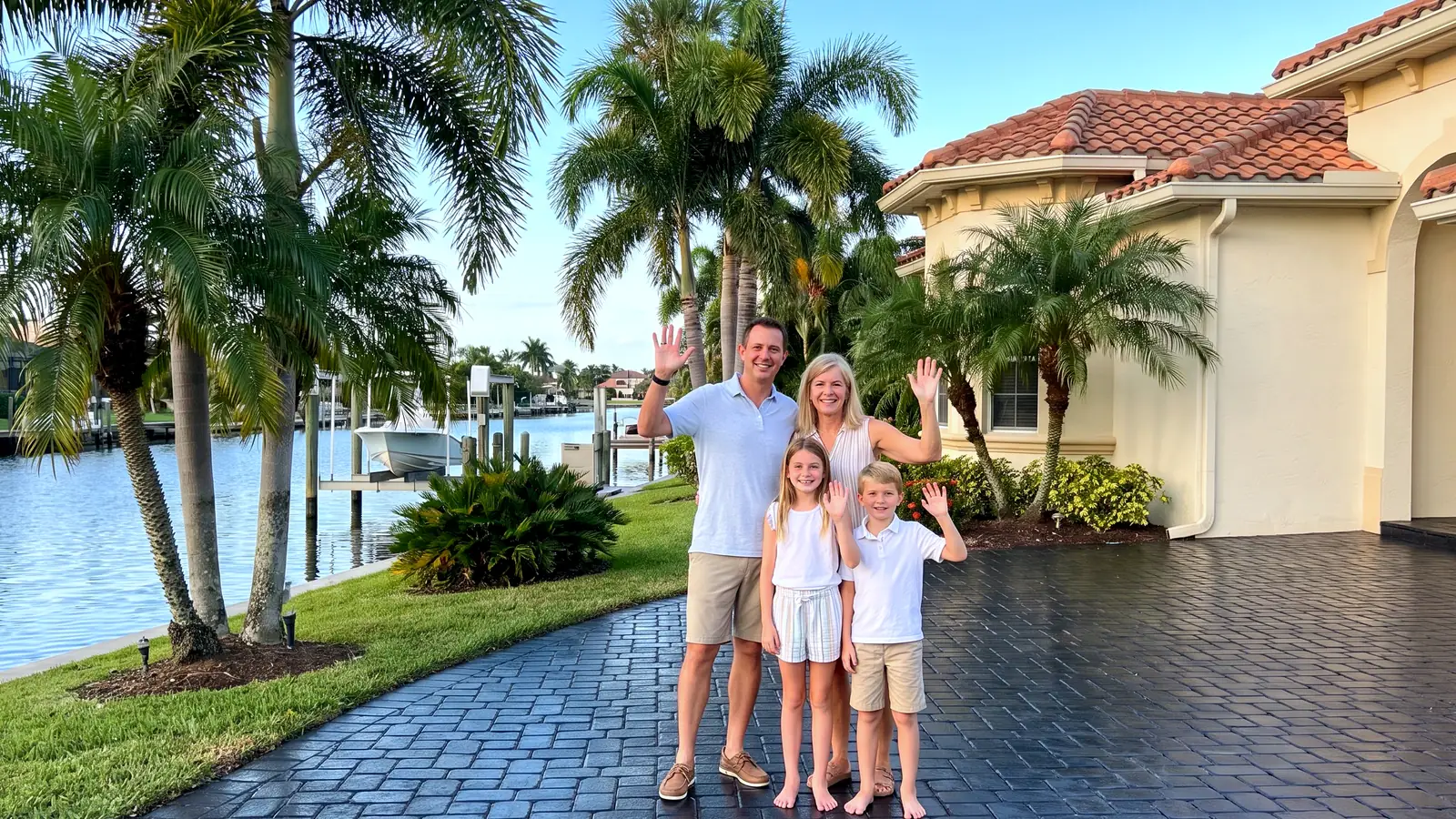
Paver sealing for Clearwater homes
Paver Sealing in Clearwater, FL
Clearwater beach side, downtown or inland, pavers wear differently, so call (727) 493-9640 for a free sealing estimate.
- Brings out deeper paver color
- Fresh joint sand helps lock pavers in place
- Gives weeds less room to grow
- Makes the surface easier to keep clean
- Free estimate, no obligation
Request a Free Estimate
Free, no obligation.
Fast, careful paver sealing in Clearwater
Paver sealing in Clearwater starts with a free estimate, whether your driveway sits on the barrier islands, near downtown or out along US 19. Cleaning, re-sanding and sealing are done by a local contractor, and a reply comes within 1 business day, often much sooner. To get started, ask for a free estimate.
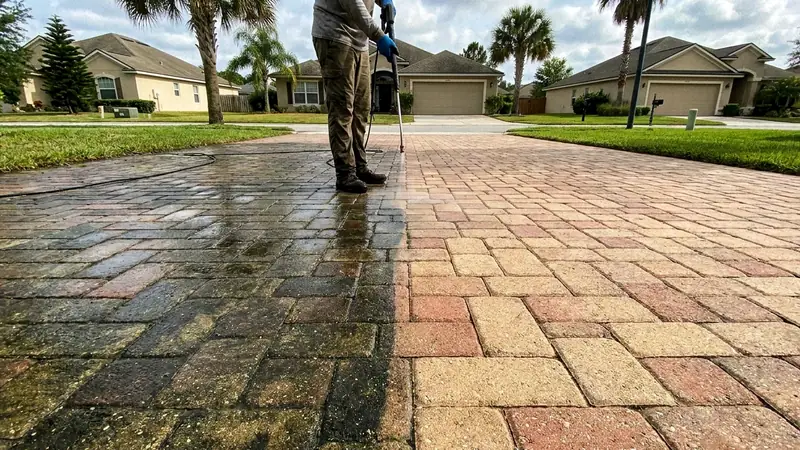
Picture the driveway that has gone gray and patchy, with sand missing from the joints and green creeping along one edge. After a wash, fresh sand and a new coat, the color evens out and rain beads on the surface again. Rather talk first? Dial (727) 493-9640 and tell the contractor about your driveway.
Why hire a local paver sealing contractor in Clearwater?
Clearwater covers open Gulf beaches, a harbor downtown and inland streets, and each one puts different wear on pavers. You can ask for a free estimate and have a local contractor look at yours.
A free look first
A local contractor measures your Clearwater pavers, then quotes a price before anything starts. Looking is free.
A published range
Companies around Tampa Bay post $1.25 to $2.50 per square foot for cleaning, sanding and sealing. Hold any Clearwater quote up to that range.
Pick the finish you like
Matte hides scuffs longer, while a wet look pushes color deeper at the cost of earlier scuffs. That matters on a driveway cars cross daily.
You make the call
The date, the finish and the decision to go ahead are all yours. A Clearwater estimate carries no obligation.
Get Your Free Estimate in Clearwater
Tell us about your pavers in Clearwater.
Free, no obligation
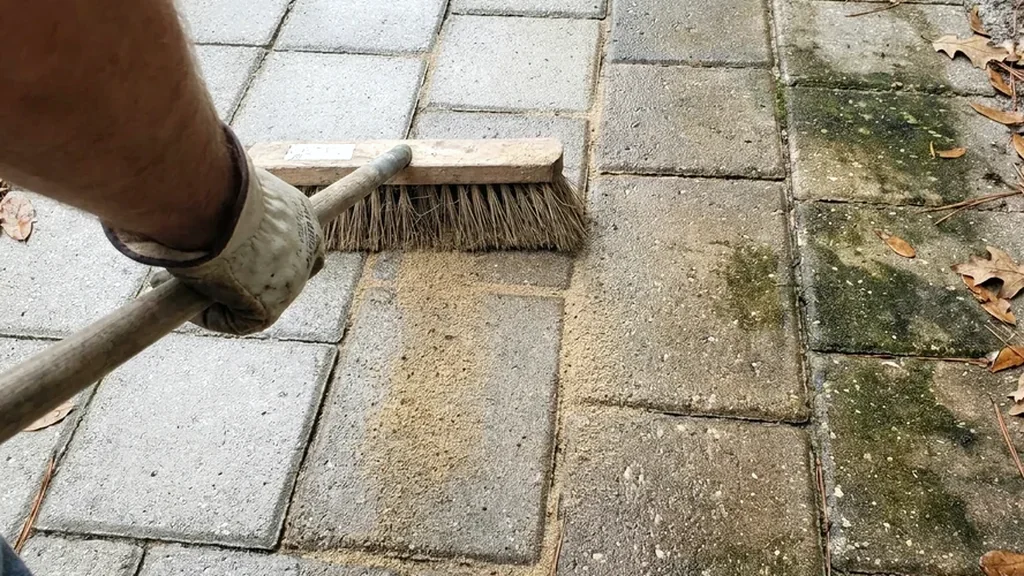
What paver problems show up most in Clearwater?
Salt air on the barrier islands
Sand Key and Clearwater Beach face the Gulf head on. A Tampa Bay paver company says homes right on the Gulf take heavier salt air and wind-driven moisture, which typically shortens the wait before a new coat. A Pinellas company puts salt and strong sun at about two years between coats. Flat color and chalky joints are the usual warning signs, and homes on the mainland side of the causeway feel less of it. Ask about a finish suited to full exposure, and about pool edges where splash and salt meet.
Damp shade away from the water
Inland, the damage comes from shade instead of salt. Most of Clearwater's rain falls between June and September, so pavers under trees or below a downspout stay wet for long stretches. Green film starts there and returns faster on a bare surface than on a sealed one. Check the north side of the house and the strip under the oaks first. A trimmed branch opens up airflow.
White haze after wet weather
A Pinellas company says salt and moisture soak into unsealed surfaces and lead to fading, efflorescence and shifting joints. Efflorescence is the pale film that appears on pavers when damp conditions bring salts to the surface, and trade guidance says it fades with time. Sealing and a wash help keep it from coming back as often. Tell the contractor if you see it. Pools with salt systems can speed this up, a Tampa Bay company says.
Joints that empty after summer storms
Storms almost every summer afternoon keep pavers soaked, and a Tampa Bay company links that to faster joint sand loss. Gaps open, ants and weeds move in, and edges can shift. After a downpour, look for sand piled at the low end of the driveway. New sand and a coat bring the joints back to full. A broom sweep after storms keeps loose sand from drifting to the lawn.
A coat that nobody remembers
Houses change hands, and the paper trail on the pavers goes missing. A water-based sealer cannot go over a solvent-based coat, so the contractor wants to know what is down before picking a product. A cloudy patch, a shiny strip or a peeling edge each tells a different story about the last job. Take a few daylight photos before the estimate. Names and dates of past jobs give a starting point.
Does paver sealing change between Clearwater Beach, downtown and the inland streets?
Yes, a little. Clearwater Beach sits on its own barrier island across the Intracoastal Waterway, and Sand Key and the island with Island Estates belong to the city too. Gulf-front homes get heavier salt air, which usually shortens the wait between coats, so call (727) 493-9640 and say how close you are to the water.
Downtown sits a couple of miles east over the Clearwater Memorial Causeway, near Cleveland Street and Coachman Park. The city dates to 1891, so many lots have had several owners, and each owner may have picked a different sealer. A good estimate looks at each surface on its own. If your home is in that part of town, ask for a free estimate.
Inland, around US 19 and Moccasin Lake Nature Park, salt matters less. Shade, sprinklers and summer storms do most of the damage there, and the Countryside area follows the same pattern. Not sure which description fits you? You can ask for a free estimate and ask.
Clearwater spreads over about 26 square miles of land and nearly 10 square miles of water, with ZIP codes from 33755 through 33767 plus 33769. That is a lot of ground for one city, so say which part you live in when you ask for a price. The contractor can then plan the drive and the right questions. To add your street to the list, ask for a free estimate.
What does paver sealing cost in Clearwater?
Figures posted by Tampa Bay companies run from $1.25 to $2.50 per square foot to wash, sand and seal. A Clearwater bid well outside that band is worth a few questions. To get a figure matched to the square footage you have, ask for a free estimate.
Three things move the number most. Size comes first, because a small patio costs more per foot than a long driveway when setup and travel stay fixed. Stains, flaking sealer and empty joints add prep time next. A wet look finish adds care at the end, so call (727) 493-9640 and describe what you see.
| Paved area | Typical example | Clean, sand and seal |
|---|---|---|
| 300 sq ft | Small patio or walkway | $375 to $750 |
| 600 sq ft | Two car driveway | $750 to $1,500 |
| 1,000 sq ft | Large driveway or pool deck | $1,250 to $2,500 |
| 1,500 sq ft | Driveway plus pool deck | $1,875 to $3,750 |
Math based on the $1.25 to $2.50 per square foot that Tampa Bay paver companies publish. Your contractor sets the actual price after seeing the surface. Repairs, leveling and stripping failed sealer are usually extra.
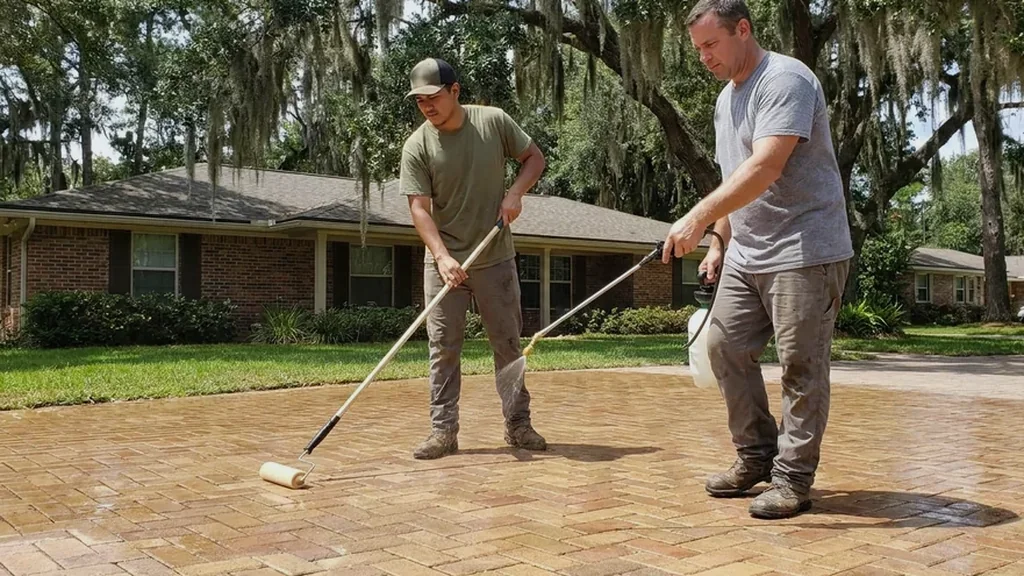
How does a paver sealing job work in Clearwater?
Start with a walk
The contractor begins at the driveway and moves through the walk, the lanai and the pool deck, measuring as they go. Expect questions about how near you are to the water, where the sprinklers aim and what coat went down last. Point out stains and soft spots. Nothing needs signing that day. Ask your questions about finish right then.
Wash it down
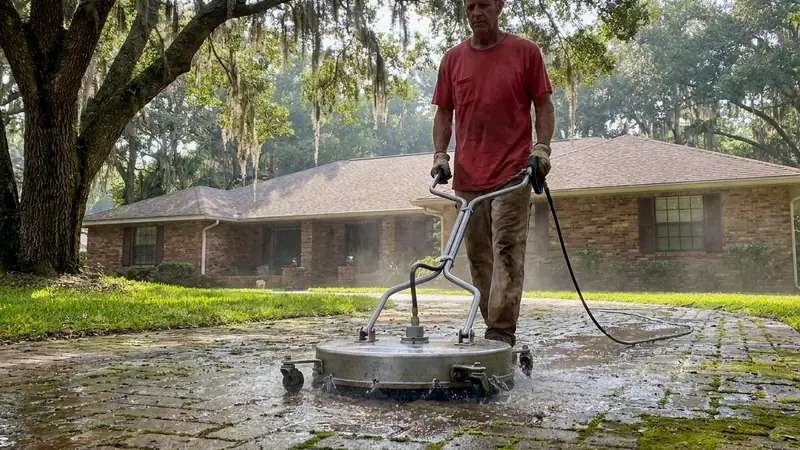
Grime, green film and old marks come off first, and a rinse carries the cleaner away. The wash also strips sand from the joints, so for a while the pavers look hollow between the stones. Pool decks and screened lanais get gentler treatment, since chemicals and splash leave marks of their own.
Put the sand back
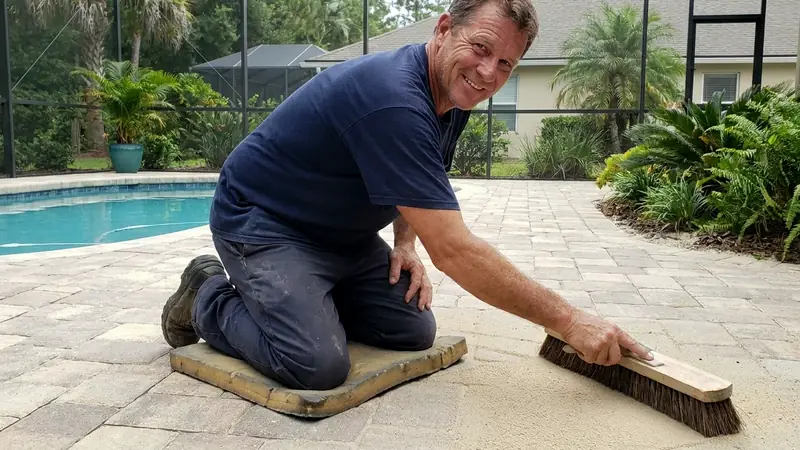
Fresh sand is swept in until the joints are full, then packed down and brushed clear of the surface. Any sunken or loose paver is flagged so you can choose whether to repair it first. Steps and edges get a second look because they lose sand sooner. Compacting the sand keeps it from washing out in the first storm.
Wait for dry weather
Sealer wants a dry surface, and Clearwater summers bring storms most afternoons. An early start, a short delay or a new date is normal. Edges beside plants, cars and screens are covered, because overspray drifts. The sealer goes on in even coats, often sprayed and then rolled where it pools. Thin, even coats look better than one heavy pass.
Cure and look it over
A Pinellas company says walking is safe after a few hours while vehicles stay off for 24 to 48 hours. Keep the sprinklers off the new coat until the contractor says otherwise. Check the finish in daylight for thin corners or shiny patches. Water should bead up on the surface. Ask when furniture can return.
Complete paver services in Clearwater
On the barrier islands, the sealer has to stand up to salt spray and wind-driven moisture. A Pinellas company puts coastal homes at about two to three years between coats. Matte, satin and wet look are all offered, and pool decks need a balance with non-slip performance. To see what fits your island lot, ask for a free estimate.
Downtown streets near Cleveland Street and Coachman Park hold older lots, and the history of the pavers can be hazy. If solvent-based sealer is down, a water-based product cannot go over it, so the contractor starts with the record. Photos or a receipt help. Call (727) 493-9640 and share what you know.
Inland neighborhoods around US 19 care less about salt and more about shade, sprinklers and wet-season storms. Shaded walks can stretch toward five years between coats, while a sunny driveway sits near the short end. A wet look gives deeper color but shows scuffs sooner than matte. When you ask for a free estimate, say which finish you prefer.
Every Clearwater job follows the same order: wash, rinse, new joint sand, dry time, sealer. Light foot traffic is fine after a few hours and vehicles wait 24 to 48 hours, per a Pinellas company. Dry mornings are scarce from late May to early October. Call (727) 493-9640 to plan around your week.
Questions to ask before you hire
- How do you remove the white haze that sometimes shows up on pavers?
- Do you treat the joints so weeds stay out after the job?
- How do you clear the moss and green film that grow near my downspouts and in the cracks?
- Is the sealer safe for my dog and my kids once it dries?
- If the sealer starts to peel next year, who do I call and what will they do about it?
- Do you lift and relevel pavers that dip near the garage apron before you start?
- How do you tell whether my pavers need a fresh coat or only a good wash?
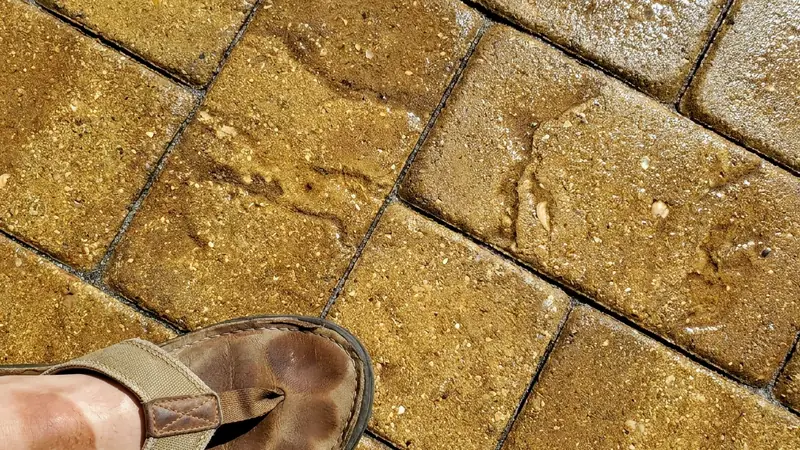
What do sealed pavers look like around Clearwater?
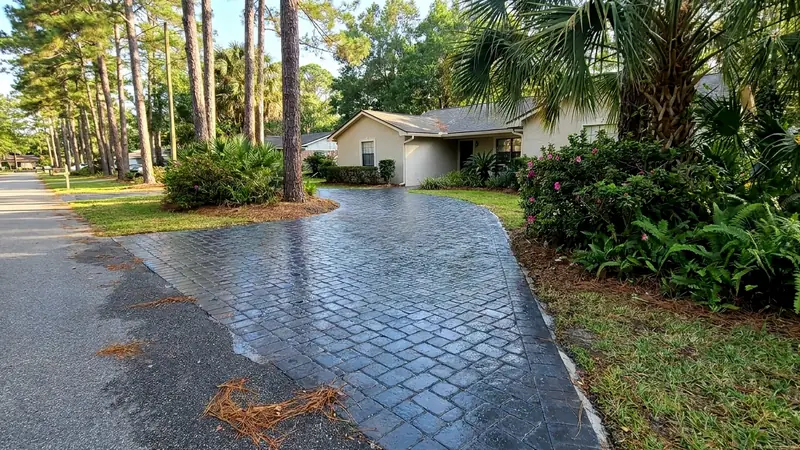
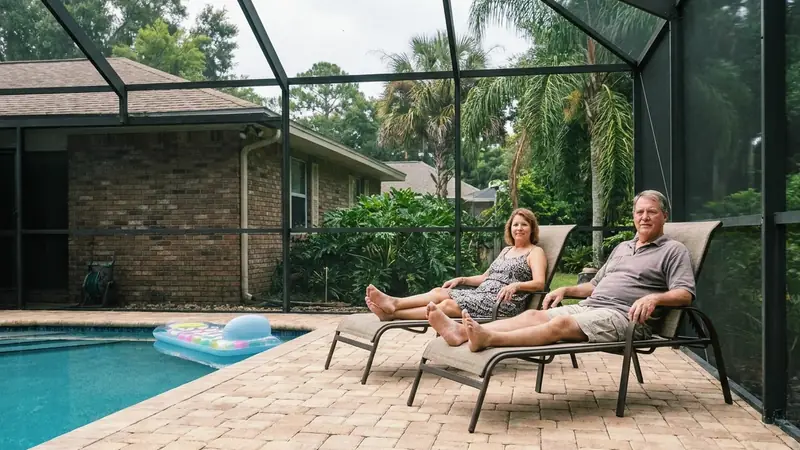
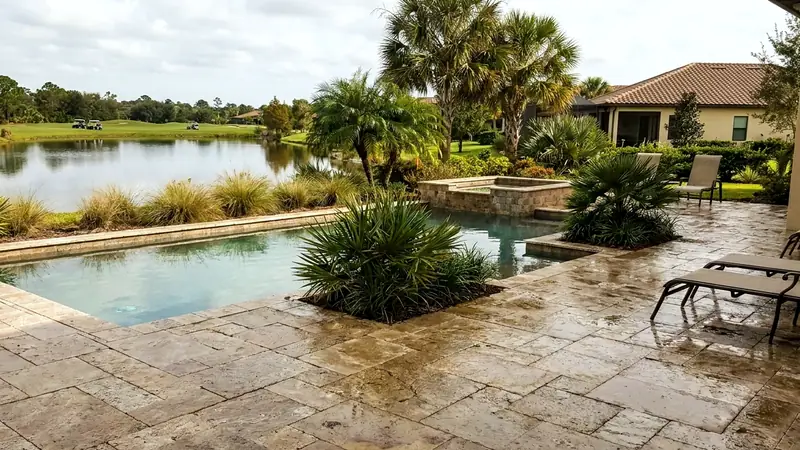
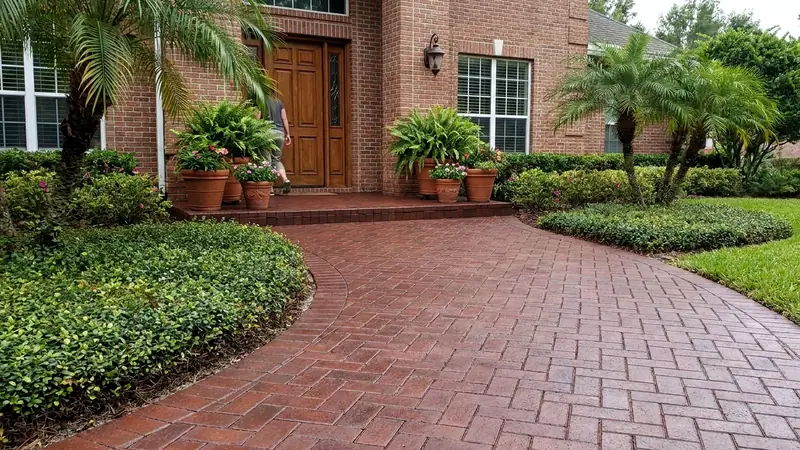
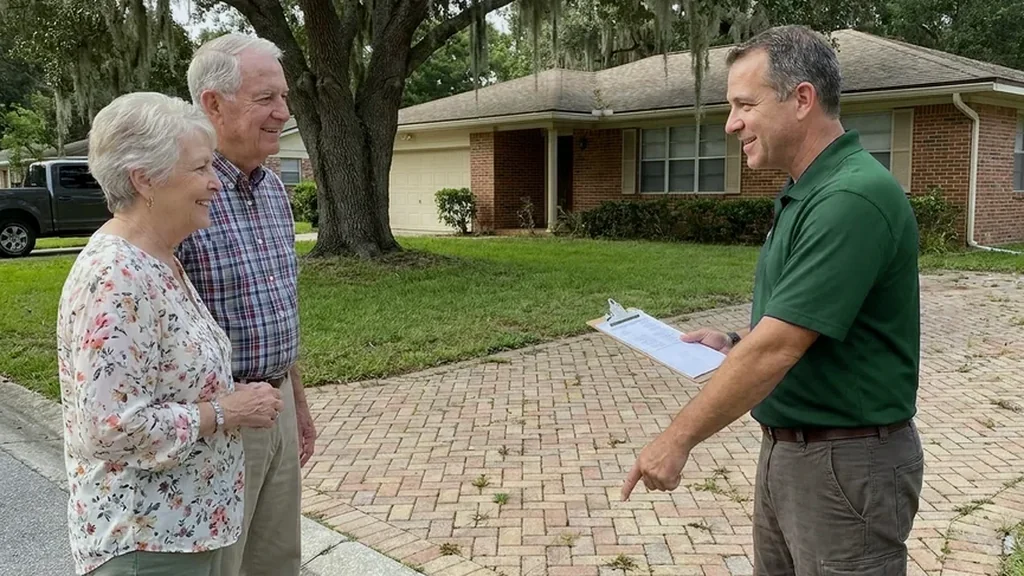
Why local matters in Clearwater
A contractor who works Clearwater daily knows the city splits along the water. The beach side sits on a barrier island across the Intracoastal Waterway, and downtown and the inland streets sit on the mainland. Salt exposure and drying time follow that split, so you can ask for a free estimate to learn how it applies to your street.
Local crews also read the calendar. The National Weather Service puts the rainy season from late May to early October, with storms most afternoons. A local contractor books sealing around those patterns, so ask about early starts when you call (727) 493-9640.
Pool decks and shade need local eyes too. Pool decks face accelerated wear from chemicals and moisture, a Tampa Bay company says, and saltwater pools speed up efflorescence. A contractor who has seen both can tell it from algae or an old coat. Include a photo of any mark you cannot name when you ask for a free estimate.
What should a Clearwater homeowner know about the city before hiring?
Clearwater is old enough that its history shows in its streets. It began as Clear Water Harbor in 1888, and the name is thought to come from a freshwater spring near the old City Hall. The Capitol Theatre on Cleveland Street opened in 1921, and a bridge to the beach opened in 1915. If your block raises a question, call (727) 493-9640.
Two parks tell the water story. Moccasin Lake Nature Park surrounds a lake that began as a pit left when dirt was dug for the US 19 embankment. Sand Key Park holds 95 acres of beach and salt marsh where sea turtles nest from April to October, so you can ask for a free estimate and plan a visit from a contractor.
The Clearwater Public Library System has five libraries, named Clearwater Main, Countryside, North Greenwood, Beach and East, which shows how far the city stretches. Clearwater is the county seat of Pinellas County, with 117,292 people in 2020. For help with a street question, call (727) 493-9640.
Frequently Asked Questions
How much does it cost to clean and seal pavers in Clearwater?
Expect $1.25 to $2.50 per square foot, the range Tampa Bay companies publish for wash, sand and seal. Per-foot cost climbs on small jobs, since a minimum service charge applies. Ask for a written price built on the measured square footage of your surfaces. A second surface on the same visit can lower the per-foot figure.
Should pavers be resealed more often near Clearwater Beach?
Coats generally hold for two to five years, going by quotes from local companies. A Pinellas company puts coastal homes at about two to three years. Gulf-side homes lean short, and shaded inland walks lean long. Pool decks and sun-baked aprons come due first. A sealed pool deck rinses more easily.
What are the downsides of sealing pavers in Clearwater?
A sealed surface needs a fresh coat every few years, so it is a recurring cost. Wet look finishes scuff earlier than matte, and a water-based product cannot sit over a solvent-based coat. Rain can also postpone the work, because sealer needs a dry surface. Knowing the trade-offs ahead of time makes the job smoother.
Should paver sealer be sprayed or rolled in Clearwater?
Both work. A sprayer covers a lot of ground fast, while a roller gives control on small areas and edges. Many contractors do both, spraying first and rolling out any pooling. The label on the sealer decides.
Does a wash come before sealing on Clearwater pavers?
Yes. Sealing over dirt would trap it under the coat, so the surface is washed and rinsed first. The wash also removes joint sand, and that sand goes back in before any sealer. Skipping the wash would leave dirt sealed in place.
Do the beach and mainland sides of Clearwater get different quotes?
Not by a set rule, since the price follows square footage and condition. The beach side may need more prep after salt, and a Gulf-front driveway may come due sooner. A written quote will show the difference.
Does Clearwater Beach salt air change how often I reseal?
It can. A Tampa Bay company says homes on the Gulf face heavier salt air and wind-driven moisture, which typically shortens the gap between coats. Inland Clearwater homes often get more time. Gulf-side lots may need more rinsing.
How long until I can walk or park on newly sealed pavers?
A Pinellas company says light foot traffic is fine after a few hours and vehicles should wait 24 to 48 hours. The sealer and the weather can change that, so ask the contractor for the exact window.
Can pavers be sealed during Clearwater's rainy season?
Yes, on dry days. From late May to early October storms are common, and sealer needs a dry surface. Expect early starts and the occasional new date. Ask for photos of each finish.
Should I seal pavers near a Clearwater pool?
Many pool decks are sealed, and the finish matters. A Pinellas company says pool decks need a balance with non-slip performance, so ask which finish grips under wet feet. Chemicals and standing water wear a coat faster.
Can I get a Clearwater estimate for just one surface?
Yes. You can ask about the driveway alone or add the walk and the pool deck. Smaller jobs cost more per foot because the minimum charge still applies, so adding a second surface can lower the figure per foot.
How soon do I hear back after asking for a Clearwater estimate?
Expect to hear back inside 1 business day, and often well ahead of that. There is no charge for the visit and no obligation to go ahead.
Nearby areas we serve
Ready for a Free Estimate in Clearwater?
Call (727) 493-9640 and tell us about your pavers.
Free, no obligation